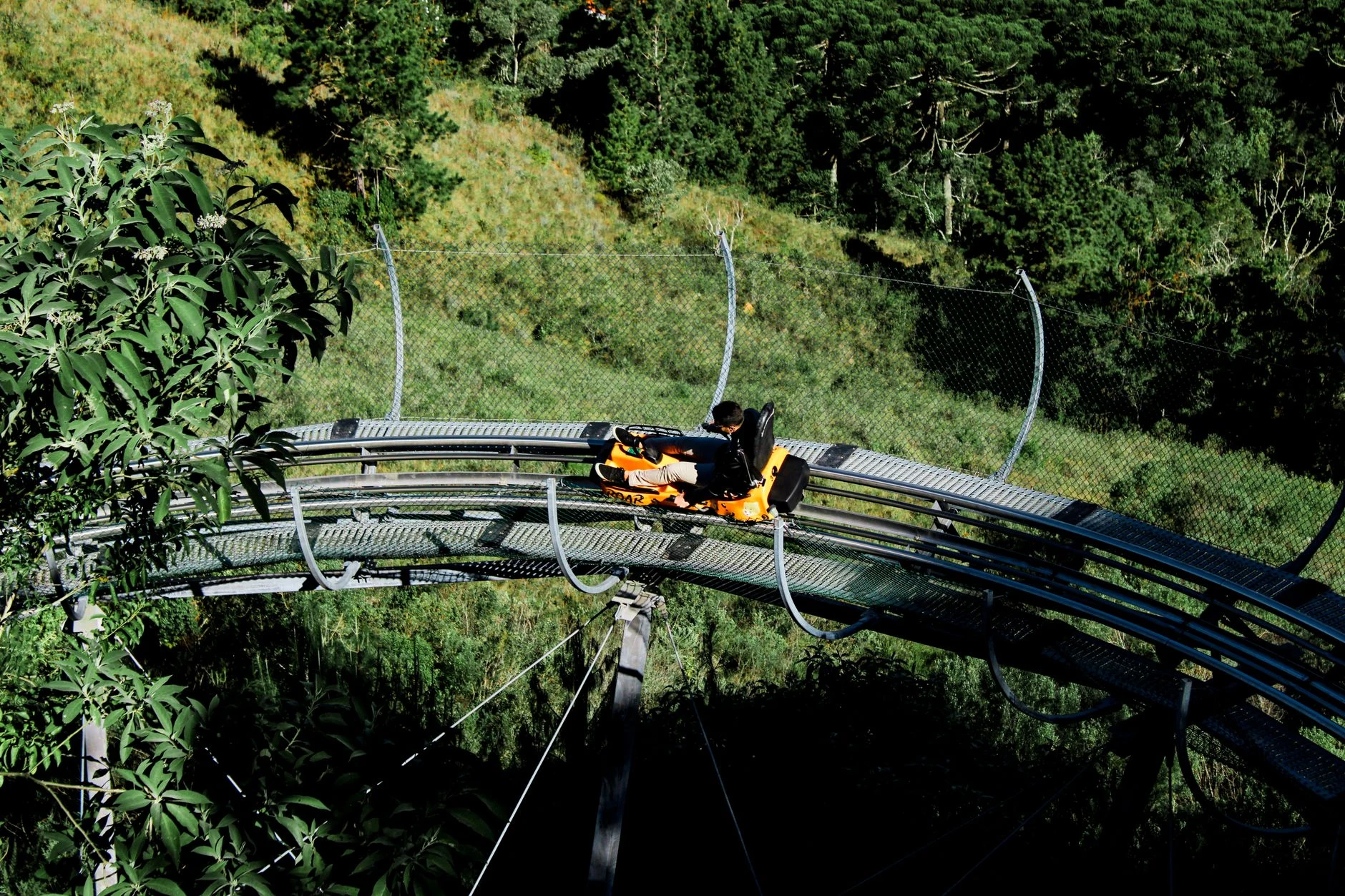
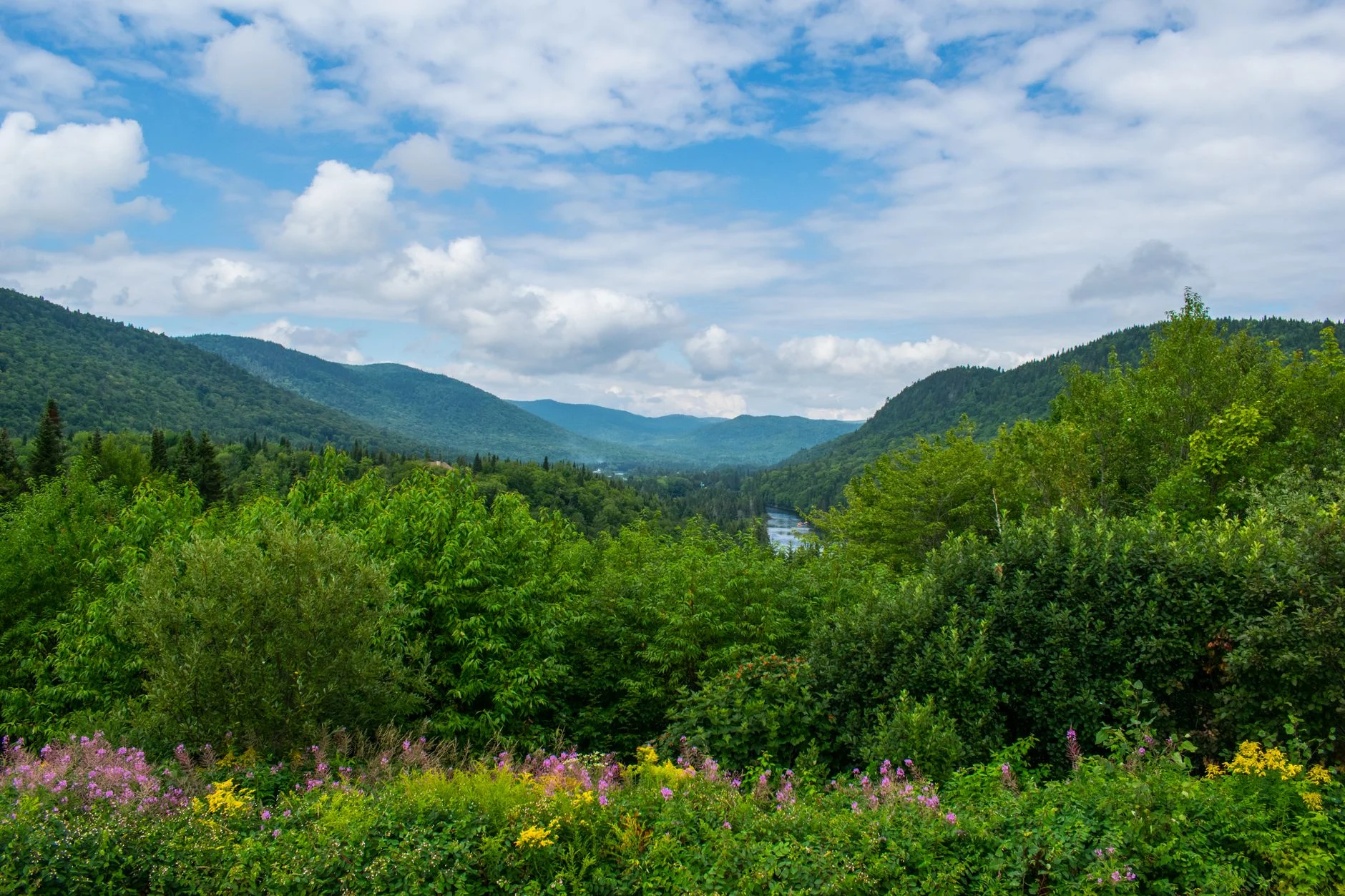
A ski mountain in July is a strange and useful thing. The lifts are mostly still, the trails are grass rather than snow, and the same slope that took ninety seconds to descend in February takes an hour to climb. Most of the Berkshire ski areas open some of their terrain to walkers in the green season, and the resulting trails have a particular character: wide, exposed, steep in sustained stretches, and with a view that arrives all at once at the top.
That is only one kind of hiking available here. Berkshire County holds a long stretch of the Appalachian Trail, the highest ground in Massachusetts, and a dense network of state forest paths that see a fraction of the traffic of the famous routes.
Walking a ski mountain in summer
Ski trails make honest but unsubtle hiking. They were cut for a machine to groom and for gravity to be enjoyable, which means they climb directly rather than switchbacking, and they offer very little shade.
The practical consequence is that a ski-slope ascent feels harder than its distance suggests. A four-mile round trip on a ski hill is not comparable to four miles on a wooded trail — the gradient is relentless and the sun is constant. Walkers used to forest paths routinely underestimate it and run short of water.
The reward is the summit view, and on the Berkshire hills the summits sit around 2,300 to 2,400 feet. That is enough elevation to see a long way across the valley on a clear day, and enough to sit in cloud on a poor one.
Access is not automatic. Some areas open their trails freely in summer, some run lift-served access on a schedule, and some restrict walking while maintenance or summer operations are running. Anyone planning a day should check what is actually open before driving — the arrangement varies between operators and changes from season to season. Practical notes on getting to the area are on getting here.
Wildlife on the trail
The animals people most often see are white-tailed deer, usually at dawn or dusk and usually at the edge of open ground rather than in dense woods. They are common enough across the county that a summer walk without a sighting is the exception.
Black bears live throughout the Berkshires and are seen occasionally on and near the trails. They are not generally a danger to walkers, but food left accessible at a picnic spot or a campsite is what turns an indifferent animal into a persistent one. Red foxes and eastern coyotes are also present, and heard more often than seen.
Ticks deserve more attention than bears. Lyme disease is established in western Massachusetts, and the practical defences are unglamorous: cover the legs on overgrown paths, stay to the middle of the trail, and check thoroughly afterwards. More on what lives here is on wildlife.
The Appalachian Trail through Massachusetts
The Appalachian Trail runs roughly ninety miles within Massachusetts, entering the state near Williamstown in the north and leaving it in the south, crossing the Hoosic and Housatonic valleys on the way.
The Massachusetts section is not the hardest on the trail, but it is not a stroll either. It alternates sustained climbs with genuinely flat river-valley stretches, which makes pacing awkward for anyone planning by distance alone. Through-hikers passing in summer tend to move quickly across it; day walkers can take almost any road crossing and walk a section out and back.
The most demanding portion in the state climbs Mount Greylock, which at 3,489 feet is the highest point in Massachusetts. There is a road to the summit, which means a walker who has earned the view shares it with people who drove — a source of mild irritation and also of a convenient way to arrange a one-way walk with a car at each end.
Greylock is high enough to make its own weather. Conditions at the summit are routinely colder and windier than at the trailhead, and the difference catches out people who set off on a warm morning in shorts.
State forests and quieter ground
Several state forests sit within the county, and a number of them offer camping alongside their trail networks. They carry far less traffic than Greylock or the Appalachian Trail corridor, which makes them the better choice on a summer weekend when the well-known routes are busy.
The trade-off is signage and maintenance. Waymarking in the state forests is generally adequate rather than generous, and a path that is obvious in June can be indistinct under leaf litter in October. A map that does not depend on a phone signal is worth carrying — coverage across much of the county is patchy, which is part of the appeal and also a practical problem.
For walkers who would rather cover ground on two wheels, much of the same terrain is open to bikes; see mountain biking. Those looking for a shorter and flatter day with a group will find the practicalities on picnics, and the wider range of warm-weather options on summer and more things to do.
Choosing a walk
For a first visit with a mixed group, a ski-hill trail is the most predictable option: the route is obvious, the distance is known, and the summit is a definite objective.
For a full day with some experience, a section of the Appalachian Trail taken from a road crossing gives better woodland walking and a more even effort.
For anyone who wants the high point of Massachusetts, Greylock is the answer, with the caveat that it demands proper clothing and a genuine look at the forecast rather than a glance at the temperature in the valley.